
Welcome to the Ammonoid subsite on Invertebrate Paleontology!
Please enter a genera name to retrieve more information.
Michelinoceras
Classification
Phylum:
Mollusca
Class:
Cephalopoda
Subclass:
Nautiloidea
Order:
Orthocerida
Superfamily:
Orthocerataceae
Family:
Orthoceratidae
Subfamily:
Michelinoceratinae
Formal Genus Name and Reference:
Michelinoceras FOERSTE, 1932, p. 51
Type Species:
Orthoceras michelini BARRANDE, 1866, OD
Images
(Click to enlarge in a new window)
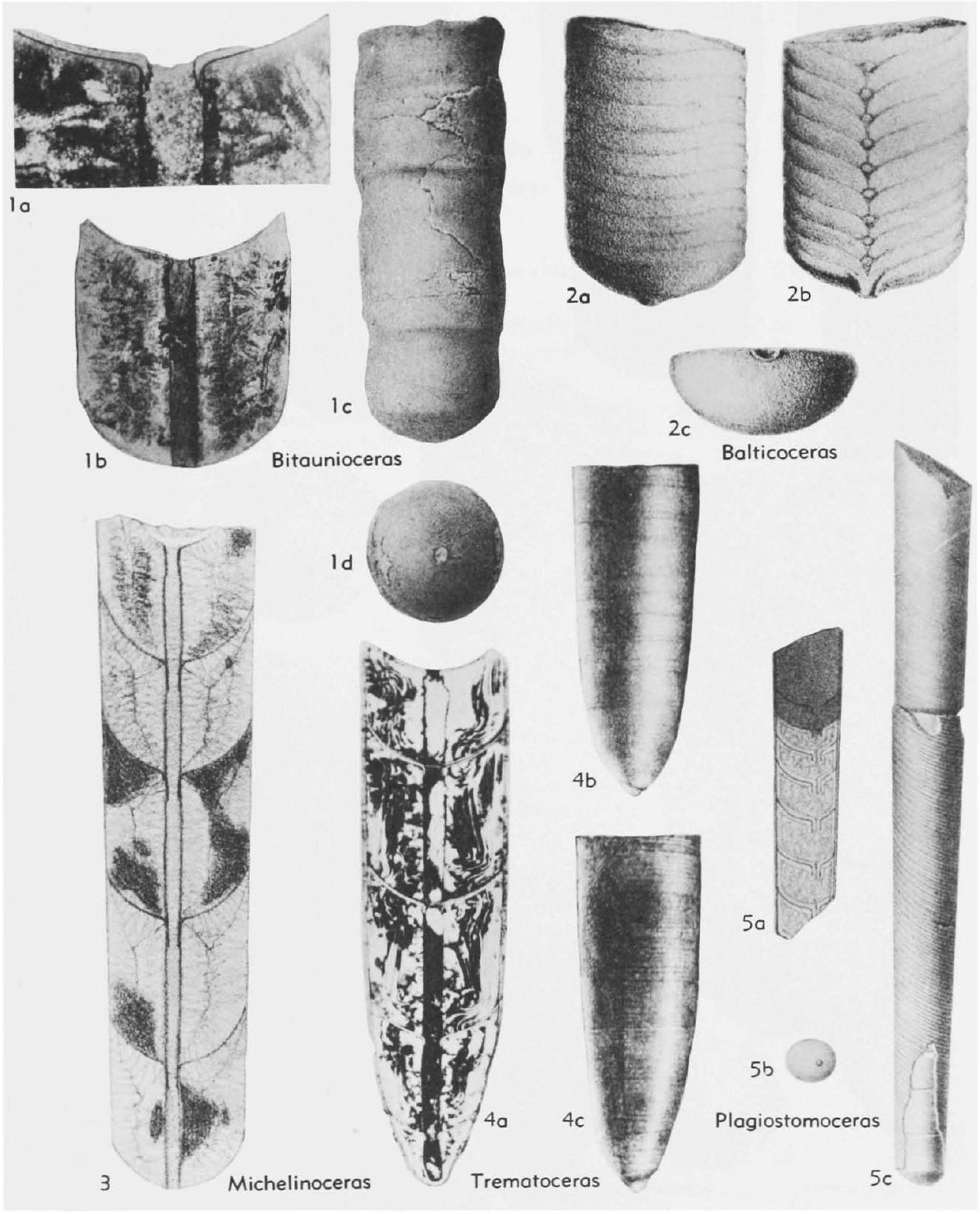 Fig. 156,3. *M. michelini (BARRANDE), M.Si!., Eu. (Czech.); long. sec., X1 (5)
Synonyms
Geographic Distribution
N. Am.-Eu.-Asia-Australia, widespread.
Age Range
Beginning Stage in Treatise Usage:
L.Ord.
Beginning International Stage:
Tremadocian
Fraction Up In Beginning Stage:
0
Beginning Date:
486.85
Ending Stage in Treatise Usage:
U.Trias.(Norian)
Ending International Stage:
Norian
Fraction Up In Ending Stage:
100
Ending Date:
205.74
Description
Long, slender, subcylindrical orthocones of circular section and with long camerae and very long body chamber, Siphuncle central or eccentric by no more than its own diameter, empty, Septal necks straight, connecting rings homogeneous, cylindrical, Well-developed hyposeptal and episeptal deposits in camerae. [FOERSTE (71) recognized that Orthoceras, based on O. regulare (SCHLOTHEIM), is of very limited scope, and can no longer accommodate a majority of the orthochoanitic orthocones with cylindrical siphuncles previously referred to it. For these species, all of which are probably not related, FOERSTE proposed the name Michelinoceras. True Michelinoceras is known from Lower Middle, and Upper Ordovician, Silurian, and Devonian rocks. Carboniferous, Permian, and Triassic species referred to the genus are relatively few in number and, for the most part, not well known internally. However, until such time as these late Paleozoic and early Mesozoic species have been studied more thoroughly, they are perhaps best included in Michelinoceras sensu lato. That practice is followed here.]
References
Museum or Author Information
Classification
Phylum:
Mollusca
Class:
Cephalopoda
Subclass:
Nautiloidea
Order:
Orthocerida
Superfamily:
Orthocerataceae
Family:
Orthoceratidae
Subfamily:
Michelinoceratinae
Formal Genus Name and Reference:
Michelinoceras FOERSTE, 1932, p. 51
Type Species:
Orthoceras michelini BARRANDE, 1866, OD
Images
(Click to enlarge in a new window)
Fig. 156,3. *M. michelini (BARRANDE), M.Si!., Eu. (Czech.); long. sec., X1 (5)
Synonyms
Geographic Distribution
N. Am.-Eu.-Asia-Australia, widespread.
Age Range
Beginning Stage in Treatise Usage:
L.Ord.
Beginning International Stage:
Tremadocian
Fraction Up In Beginning Stage:
0
Beginning Date:
486.85
Ending Stage in Treatise Usage:
U.Trias.(Norian)
Ending International Stage:
Norian
Fraction Up In Ending Stage:
100
Ending Date:
205.74
Description
Long, slender, subcylindrical orthocones of circular section and with long camerae and very long body chamber, Siphuncle central or eccentric by no more than its own diameter, empty, Septal necks straight, connecting rings homogeneous, cylindrical, Well-developed hyposeptal and episeptal deposits in camerae. [FOERSTE (71) recognized that Orthoceras, based on O. regulare (SCHLOTHEIM), is of very limited scope, and can no longer accommodate a majority of the orthochoanitic orthocones with cylindrical siphuncles previously referred to it. For these species, all of which are probably not related, FOERSTE proposed the name Michelinoceras. True Michelinoceras is known from Lower Middle, and Upper Ordovician, Silurian, and Devonian rocks. Carboniferous, Permian, and Triassic species referred to the genus are relatively few in number and, for the most part, not well known internally. However, until such time as these late Paleozoic and early Mesozoic species have been studied more thoroughly, they are perhaps best included in Michelinoceras sensu lato. That practice is followed here.]