About
Dive into a world of in-depth analysis and scholarly insights.
The Treatise on Invertebrate Paleontology is a definitive multi-authored work of some 50 volumes, written by more than 300 paleontologists, and covering every phylum, class, order, family, and genus of fossil and extant (still living) invertebrate animals. The descriptions include their taxonomy, morphology, and stratigraphic and paleogeographic range.
The current editor is Bruce S. Lieberman at The Paleontological Institute at the University of Kansas in Lawrence, Kansas. The online website system was developed in coordination with Dr. Lieberman's team by the Earth History Visualization team of undergraduate computer engineers at Purdue University under the guidance of James Ogg and Aaron Ault. The Treatise publication website is https://journals.ku.edu/InvertebratePaleo.
API Documentation
Search the Treatise fossil dataset through the API. Each phylum is hosted on its own subsite and must be queried independently.
Send a GET request to https://<phylum>.treatise.geolex.org/searchAPI.php, replacing <phylum> with a subsite name.
Examples: Brachiopod API and Charophyte API. Calling the endpoint without parameters returns the complete dataset for that subsite. All parameters are optional and may be combined.
| Parameter | Type | Default | Description |
|---|---|---|---|
searchquery | String | — | Search genus names; partial matches are supported (e.g. Horn matches Hornosaurus). |
classfilter | String | All | Filter by taxonomic class. |
orderfilter | String | All | Filter by taxonomic order. |
subphylumfilter | String | All | Filter by subphylum. |
subclassfilter | String | All | Filter by subclass. |
geographyfilter | String | All | Filter by geographic region (e.g. USA, Russia, North America). |
stagefilter | String | All | Filter by geological stage (e.g. Holocene); partial matching is not supported, so use the full stage name. |
agefilterstart | Number | — | Older (larger) age bound in Ma. |
agefilterend | Number | — | Younger (smaller) age bound in Ma. |
genusOnly | Boolean | false | When true, return only the Genus field. |
addSynonyms | Boolean | false | When true, also return the Synonyms field. |
Age filtering: A taxon's full temporal range must fall within the interval. agefilterstart is the larger (older) value; agefilterend is the smaller (younger) value.
String filters: Passing All or leaving a filter empty matches all records, including records without a value for that field.
These examples use the brachiopod subsite:
searchAPI.php?searchquery=Sivorthis— find the genus Sivorthis.searchAPI.php?classfilter=Rhynchonellata&geographyfilter=Europe— filter by class and geography.searchAPI.php?agefilterstart=100&agefilterend=66— filter to the 100–66 Ma interval.searchAPI.php?searchquery=Lingula&genusOnly=true&addSynonyms=true— return genus names with populated synonym information.
The API returns JSON with genus names as keys in data; each genus entry contains the available fields (or only the requested fields):
{
  "data": {
    "GenusName": {
      "Phylum": "...",
      "Subphylum": "...",
      "Class": "...",
      "region": "...",
      "sub-region": "...",
      "province": "...",
      "sub_province": "..."
    }
  },
  "isSynonym": false
}
isSynonym indicates that the API retried the search against Synonyms after finding no genus-name match. This fallback can help resolve legacy or alternative names.
By default, all available columns are returned. Use genusOnly=true to return genus names only; combine it with addSynonyms=true to include synonyms.
Data Contributors

Bruce S. Liberman
University of Kansas (The Paleontological Institute)
2024-Present
Editor
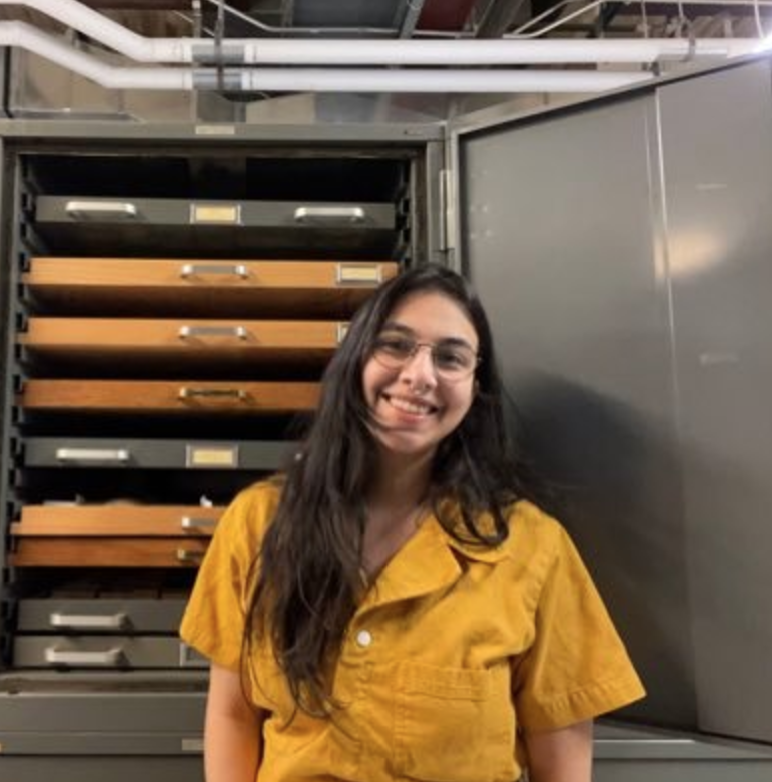
Natalia Lopez Carranza
University of Kansas (The Paleontological Institute)
2024-Present
Editor